Places and People Forest of Dean
- About the Forest of Dean
- Abenhall, Gloucestershire
- Anchor Inn, Lydbrook
- Ariconium, Herefordshire
- Arthur and Edward Colliery
- Bigsweir, Gloucestershire
- Bishopswood, Herefordshireshire
- Bixslade (Bicslade)
- Blakeney, Gloucestershire
- Bloomery (definition)
- Bradley House
- Bream, Gloucestershire
- Bullo Pill, Gloucestershire
- Cannop Colliery
- Cinderford, Gloucestershire
- Clearwell, Gloucestershire
- Coleford, Gloucestershire
- Collieries
- Crawshay, Henry
- Danby Lodge
- Darkhill Brick, Colliery + Ironworks
- Dates in the Forest of Dean
- Dean Forest (Mines) Act 1838
- Dean Forest Railway
- Dean Forest (Reafforestation)
Act 1668 - The Dean Forest Riots
- Dean Hall, Littledean
- Dean Heritage Centre
- Dean Road
- Drybrook, Gloucestershire
- Eastern United Colliery
- Fairplay Iron Mine
- Findall Iron Mine
- Flaxley, Gloucestershire
- Forest of Dean Central Railway
- Free Miners
- Green Bottom
- Gunns Mill
- The Haie (house + tunnel)
- Harvey, F. W.
- Hopewell Engine Colliery
- Horlick, James and William
- Kings Lodge
- Lightmoor Colliery
- Littledean, Gloucestershire
- Lower Redbrook, Gloucestershire
- Lydbrook, Gloucestershire
- Lydney, Gloucestershire
- Mining and Forest Terms
- Mitcheldean, Gloucestershire
- Mushet, David and Robert
- Nelson Colliery
- Newland, Gloucestershire
- Newnham, Gloucestershire
- Northern United Colliery
- Offas Dyke
- Parkend, Gloucestershire
- Pillowell, Gloucestershire
- Protheroe, Edward
- Pubs of the Forest of Dean
- Purton, Gloucestershire
- Redbrook, Gloucestershire
- Ruardean, Gloucestershire
- Severn and Wye Railway Co.
- Severn Bridge Railway
- Shakemantle Iron Mine
- Speech House
- Speech House Hill Colliery
- St Briavels Castle
- St Briavels, May-pole
- Strip-and at-it Colliery
- Symonds Yat
- Teague, James
- Teague, Moses
- Trafalgar Colliery
- Tramroad
- True Blue Colliery
- Union Colliery
- Upper and Middle Forge
- Upper Lydbrook Station
- Upper Mill, Edge Hills
- Upper Redbrook
- Verderer (definition)
- Verderers' Court
- Welshbury Hill Fort
- Westbury Brook Iron Mine
- Whitecliff Furnace
- Whitecliff House
- Whitecliff Quarry
- Whitecroft
- Whitecross Manor
- Wigpool, Gloucestershire
- Wintour, Sir John
Parkend, Gloucestershire
|
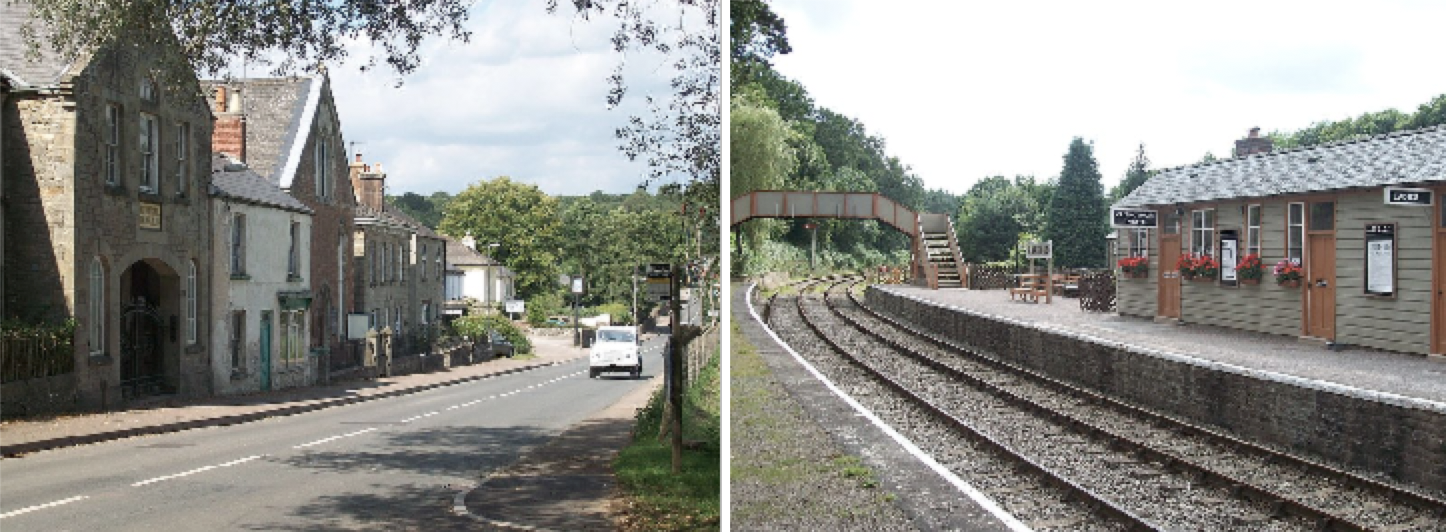
Parkend is a village in the Forest of Dean and it commands a cental position almost equidistant from the towns of Coleford, Cinderford and Lydney. A hoard of over 1,000 Roman coins, dating from AD 300, were found here in 1852, although tere is no evidenve of a settlement here. The year 1278 records a hunting enclosure named "Wistemeade", later called Whitemead Park. Parkend was at one end of this park. In 1612 a charcoal-fired blast furnace and a forge was operating here owned by James I. For obvious reasons is was called the Kings' Ironworks. It was not particularly efficient and was closed in 1674. Several bell pits were found possibly dating back to the 1600's, but the first existing record of a coal mine was in 1718. Industrialisation as we would know occurred from about 1799, with the construction of an ironworks, coal-fired furnaces and several coalmines. By the 1800's it was a very busy industrial village with coal mines, an ironworks, a stoneworks and a tinplate works. Close to Parkend just to the west was the ever-developing Darkhill. In 1825 a pond was built at Cannop (the lower one) together with a leat to prvide a water supply for the waterwheel at Parkend ironworks. Sadly it proved inadequate so and steam engine, together with a an engine house, were built in in 1828. A year later a second Cannop pond was created just to the north of the first one. The ironworks were demolished in 1909. The stoneworks at Parkend were built in 1850 and three years later a tinplate works were built. By the early 1900's those industries had begun to decline. The stoneworks closed in 1932, marking the end ofheavy industry in the village. Below is a street scene and the railway station at Parkend.
|
There are two public houses in the village - the Fountain Inn (the oldest surviving building, built in 1767) and the Woodman Inn. The Fountain is of special interest to us because Elizabeth Burgham, from Redbrook Brewery, purchased it in 1891. (Burgham was always an alternative spelling to Burgum).
The church of Parkend St Pauls has associations with the Burgums and you can read about them here.
The railway here started started life in 1810 as a horse-drawn tramroad. Owned by the Severn and Wye Railway Company, it was later converted to a stand gauge system rails for steam locomotion. In 1875 its railway station was built. This enable the company to benefit from both Fright operations and passenger traffic. The railway station closed in 1929 owing to a decline in passenger traffic and a reduction in coal production. The final goods train left Parkend in March 1976 and, soon after, much of the track was dismantled. The end of an era. Or was it?
The railway line was purchased by the Dean forest Railway, who were based at Norchard, in Lydney. Parkend Railway Station is now the northern terminus of the Dean Forest Railway, but we do not know how long it will remain so. There are plans to extend its track through the Dean Forest to Speech House Road, not far from the Beechenhurst Visitor Attraction. There are further aspirations to extend the line all the way to Cinderford, but we shall wait and see what happens!
Parkend was just four miles from my family home at Bradley Hill, near Blakeney. After my father retired he and my mother moved from Devon to Parkend. It was said that some Foresters were not very keen on outsiders, but my father would proudly talk about my research and the fact our ancestors had been in the Forest of Dean for at least 400 years. His friends in Parkend would smile and say to him - "Well John, you be a Forester!"
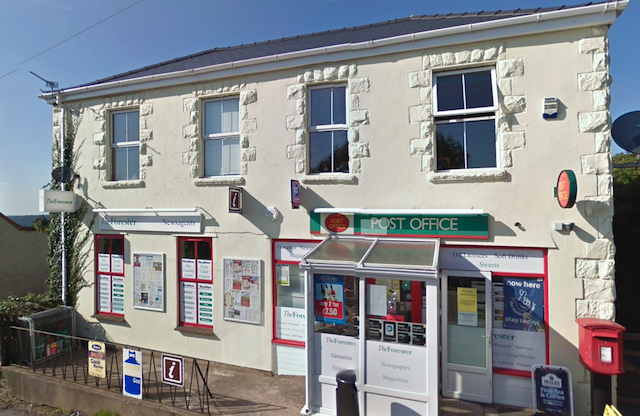
At one time my two sisters ran the Post Office at nearby Yorkley (picture below).