Places and People Forest of Dean
- About the Forest of Dean
- Abenhall, Gloucestershire
- Anchor Inn, Lydbrook
- Ariconium, Herefordshire
- Arthur and Edward Colliery
- Bigsweir, Gloucestershire
- Bishopswood, Herefordshireshire
- Bixslade (Bicslade)
- Blakeney, Gloucestershire
- Bloomery (definition)
- Bradley House
- Bream, Gloucestershire
- Bullo Pill, Gloucestershire
- Cannop Colliery
- Cinderford, Gloucestershire
- Clearwell, Gloucestershire
- Coleford, Gloucestershire
- Collieries
- Crawshay, Henry
- Danby Lodge
- Darkhill Brick, Colliery + Ironworks
- Dates in the Forest of Dean
- Dean Forest (Mines) Act 1838
- Dean Forest Railway
- Dean Forest (Reafforestation)
Act 1668 - The Dean Forest Riots
- Dean Hall, Littledean
- Dean Heritage Centre
- Dean Road
- Drybrook, Gloucestershire
- Eastern United Colliery
- Fairplay Iron Mine
- Findall Iron Mine
- Flaxley, Gloucestershire
- Forest of Dean Central Railway
- Free Miners
- Green Bottom
- Gunns Mill
- The Haie (house + tunnel)
- Harvey, F. W.
- Hopewell Engine Colliery
- Horlick, James and William
- Kings Lodge
- Lightmoor Colliery
- Littledean, Gloucestershire
- Lower Redbrook, Gloucestershire
- Lydbrook, Gloucestershire
- Lydney, Gloucestershire
- Mining and Forest Terms
- Mitcheldean, Gloucestershire
- Mushet, David and Robert
- Nelson Colliery
- Newland, Gloucestershire
- Newnham, Gloucestershire
- Northern United Colliery
- Offas Dyke
- Parkend, Gloucestershire
- Pillowell, Gloucestershire
- Protheroe, Edward
- Pubs of the Forest of Dean
- Purton, Gloucestershire
- Redbrook, Gloucestershire
- Ruardean, Gloucestershire
- Severn and Wye Railway Co.
- Severn Bridge Railway
- Shakemantle Iron Mine
- Speech House
- Speech House Hill Colliery
- St Briavels Castle
- St Briavels, May-pole
- Strip-and at-it Colliery
- Symonds Yat
- Teague, James
- Teague, Moses
- Trafalgar Colliery
- Tramroad
- True Blue Colliery
- Union Colliery
- Upper and Middle Forge
- Upper Lydbrook Station
- Upper Mill, Edge Hills
- Upper Redbrook
- Verderer (definition)
- Verderers' Court
- Welshbury Hill Fort
- Westbury Brook Iron Mine
- Whitecliff Furnace
- Whitecliff House
- Whitecliff Quarry
- Whitecroft
- Whitecross Manor
- Wigpool, Gloucestershire
- Wintour, Sir John
The Horlick Brothers
| James Horlick (1844-1921)
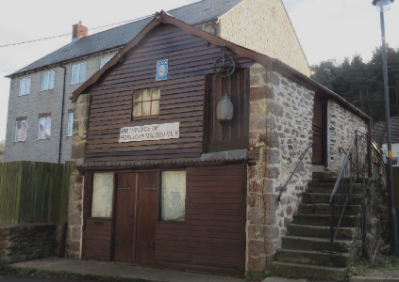
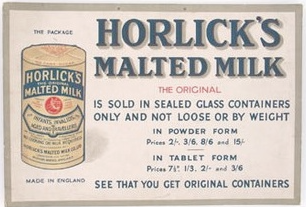
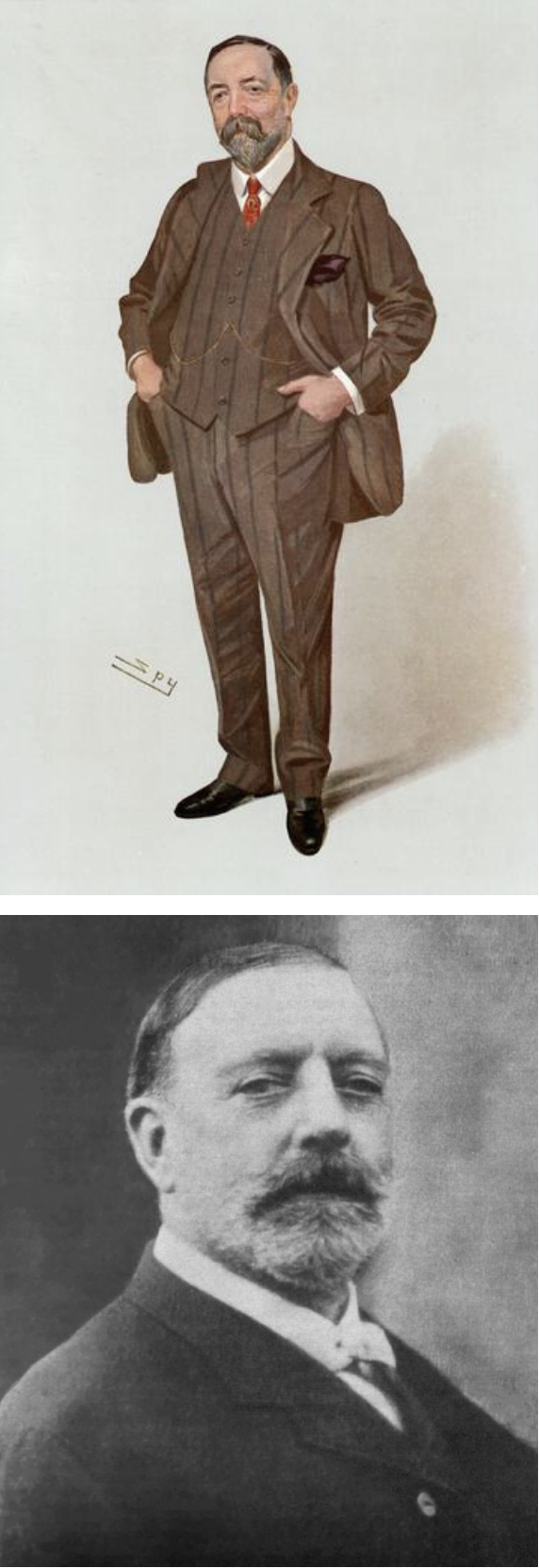
was born at Ruardean, in the Forest of Dean, in 1844. Two years later his brother William was also born at Ruardean (see below). Both brothers moved to London when in their late teens. James joined a homeopathist chemist in Bond Street, London. He qualified as a pharmacist in 1869. He was working on a dried infant food, made from malt and bran, designed to be mixed ith milk and water. He was unable to raise enough money to produce and market the new drink in London and so left for America in 1873 to join his brother. Before leaving for the USA he married Margaret Adelaide Burford in Westminster, London, on 12 April 1873. That same year he and his brother founded the J. & W. Horlicks Company, in Chicago. There they were to patent and then mass produce their malted milk drink as an artifical baby food. After two years they moved the business to larger premises in Racine, Wisconsin, 25 miles south of Milwaukee. In 1890 James went back to London in order to set up an office to import the Horlicks product to the UK. In 1906 he selected Slough, west of London, to set up a new Horlicks factory. James Horlick was made a baronet in 1914. During World War One his nutitional drink proved popular in England and overseas. Sir James Horlick died at St Martins, London, on 7th May 1921. He was 77 years old. Probate shows he left effects valued at £450,481 5s. 5d. (The picture right was from Vanity Fair magazine). William Horlick (1846-1936) was born at Ruardean, in the Forest of Dean, in 1846. His father James Horlick was a sadler. William entered an apprenticeship to also be a sadler. When at home in Ruardean William assisted his brother James and their father, experimenting with granualted wheat and barley. (picture below).
William emigrated to the USA in 1869. Then, in 1872, joined by his brother James, they began their food manufacturing business. The Horlick Food Company was founded in 1875 and they moved to Racine, Wisconsin the next year. The product was called Horlicks Malted Milk. The company opened branches in New York in 1889 and, as mentioned, in England. Following his brother's death in 1921, William became Company President. William (picture right) donated significant amounts of money to local projects such as a maternity ward at the hospital, land for a High School to be built and the Horlick Athletic Field. He also financed expeditions to Antartica and the North Pole. The Horlick Mountains in the Antartic are named after him. William died in 1936 leaving his wife Arabella and their two children.
|
 |