Places and People Forest of Dean
- About the Forest of Dean
- Abenhall, Gloucestershire
- Anchor Inn, Lydbrook
- Ariconium, Herefordshire
- Arthur and Edward Colliery
- Bigsweir, Gloucestershire
- Bishopswood, Herefordshireshire
- Bixslade (Bicslade)
- Blakeney, Gloucestershire
- Bloomery (definition)
- Bradley House
- Bream, Gloucestershire
- Bullo Pill, Gloucestershire
- Cannop Colliery
- Cinderford, Gloucestershire
- Clearwell, Gloucestershire
- Coleford, Gloucestershire
- Collieries
- Crawshay, Henry
- Danby Lodge
- Darkhill Brick, Colliery + Ironworks
- Dates in the Forest of Dean
- Dean Forest (Mines) Act 1838
- Dean Forest Railway
- Dean Forest (Reafforestation)
Act 1668 - The Dean Forest Riots
- Dean Hall, Littledean
- Dean Heritage Centre
- Dean Road
- Drybrook, Gloucestershire
- Eastern United Colliery
- Fairplay Iron Mine
- Findall Iron Mine
- Flaxley, Gloucestershire
- Forest of Dean Central Railway
- Free Miners
- Green Bottom
- Gunns Mill
- The Haie (house + tunnel)
- Harvey, F. W.
- Hopewell Engine Colliery
- Horlick, James and William
- Kings Lodge
- Lightmoor Colliery
- Littledean, Gloucestershire
- Lower Redbrook, Gloucestershire
- Lydbrook, Gloucestershire
- Lydney, Gloucestershire
- Mining and Forest Terms
- Mitcheldean, Gloucestershire
- Mushet, David and Robert
- Nelson Colliery
- Newland, Gloucestershire
- Newnham, Gloucestershire
- Northern United Colliery
- Offas Dyke
- Parkend, Gloucestershire
- Pillowell, Gloucestershire
- Protheroe, Edward
- Pubs of the Forest of Dean
- Purton, Gloucestershire
- Redbrook, Gloucestershire
- Ruardean, Gloucestershire
- Severn and Wye Railway Co.
- Severn Bridge Railway
- Shakemantle Iron Mine
- Speech House
- Speech House Hill Colliery
- St Briavels Castle
- St Briavels, May-pole
- Strip-and at-it Colliery
- Symonds Yat
- Teague, James
- Teague, Moses
- Trafalgar Colliery
- Tramroad
- True Blue Colliery
- Union Colliery
- Upper and Middle Forge
- Upper Lydbrook Station
- Upper Mill, Edge Hills
- Upper Redbrook
- Verderer (definition)
- Verderers' Court
- Welshbury Hill Fort
- Westbury Brook Iron Mine
- Whitecliff Furnace
- Whitecliff House
- Whitecliff Quarry
- Whitecroft
- Whitecross Manor
- Wigpool, Gloucestershire
- Wintour, Sir John
F. W. Harvey (1888-1957)
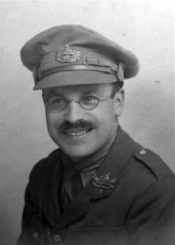
| Frederick William Harvey was an English poet and was called "The Laureate of Gloucestershire". His poetry became very popular during and after World War One. He was also a broadcaster and a solicitor. He was born in Hartbury, in Gloucestershire and grew up in Minsterworth. He attended King's School in nearby Gloucster. On 4th August 1914 the UK decared war on Germany. Four days later Harvey joined the 5th Battalion, Gloucestershire Regiment with the rank of private. Three months later he became a Roman Catholic. His battalion was posted to France in March 1915 where he was promoted to Lance Corporal. He was also awarded the Distinguished Conduct Medal. While on patrol he and another solder encountered the enemy. Between them they killed three Germans and captured their rifles and a pistol. Harvey returned to England for officer training and received his commission. He returned to the front-line in France but, in August 1916, was captured, spending the rest of the war in German prisoner-of-war camps. Harvey was already a prisoner-of-war when his first volume of poems were published. It was called "A Gloucestershire Lad At Home and Abroad." Remarkably he was permitted to send his poems back to England and in 1817 "Gloucestershire Friends" was published. His third volume of poems was entitled "Ducks, and other Verses". The collection was named after a poem of the same name, which was most probably his most popular poem. F.W. Harvey returned home to England in 1919. In 1921 he married Sarah Anne Kane, an Irish nurse. They had two children and lived a modest life. He continued to practice law with offices in Lydney, but often waived his fees. He continued to right and began a relationship with BBC Radio Bristol in 1928, which including writing and occasionally broadcasting radio programs. Harvey served with the Home Guard during World War two, but his health began to deteriorate thereafter. The BBC dedicated a whole program to him in 1956 called "Sing a Song of Gloucestershire". He died at Yorkley in February 1957. |
 |