Places and People Forest of Dean
- About the Forest of Dean
- Abenhall, Gloucestershire
- Anchor Inn, Lydbrook
- Ariconium, Herefordshire
- Arthur and Edward Colliery
- Bigsweir, Gloucestershire
- Bishopswood, Herefordshireshire
- Bixslade (Bicslade)
- Blakeney, Gloucestershire
- Bloomery (definition)
- Bradley House
- Bream, Gloucestershire
- Bullo Pill, Gloucestershire
- Cannop Colliery
- Cinderford, Gloucestershire
- Clearwell, Gloucestershire
- Coleford, Gloucestershire
- Collieries
- Crawshay, Henry
- Danby Lodge
- Darkhill Brick, Colliery + Ironworks
- Dates in the Forest of Dean
- Dean Forest (Mines) Act 1838
- Dean Forest Railway
- Dean Forest (Reafforestation)
Act 1668 - The Dean Forest Riots
- Dean Hall, Littledean
- Dean Heritage Centre
- Dean Road
- Drybrook, Gloucestershire
- Eastern United Colliery
- Fairplay Iron Mine
- Findall Iron Mine
- Flaxley, Gloucestershire
- Forest of Dean Central Railway
- Free Miners
- Green Bottom
- Gunns Mill
- The Haie (house + tunnel)
- Harvey, F. W.
- Hopewell Engine Colliery
- Horlick, James and William
- Kings Lodge
- Lightmoor Colliery
- Littledean, Gloucestershire
- Lower Redbrook, Gloucestershire
- Lydbrook, Gloucestershire
- Lydney, Gloucestershire
- Mining and Forest Terms
- Mitcheldean, Gloucestershire
- Mushet, David and Robert
- Nelson Colliery
- Newland, Gloucestershire
- Newnham, Gloucestershire
- Northern United Colliery
- Offas Dyke
- Parkend, Gloucestershire
- Pillowell, Gloucestershire
- Protheroe, Edward
- Pubs of the Forest of Dean
- Purton, Gloucestershire
- Redbrook, Gloucestershire
- Ruardean, Gloucestershire
- Severn and Wye Railway Co.
- Severn Bridge Railway
- Shakemantle Iron Mine
- Speech House
- Speech House Hill Colliery
- St Briavels Castle
- St Briavels, May-pole
- Strip-and at-it Colliery
- Symonds Yat
- Teague, James
- Teague, Moses
- Trafalgar Colliery
- Tramroad
- True Blue Colliery
- Union Colliery
- Upper and Middle Forge
- Upper Lydbrook Station
- Upper Mill, Edge Hills
- Upper Redbrook
- Verderer (definition)
- Verderers' Court
- Welshbury Hill Fort
- Westbury Brook Iron Mine
- Whitecliff Furnace
- Whitecliff House
- Whitecliff Quarry
- Whitecroft
- Whitecross Manor
- Wigpool, Gloucestershire
- Wintour, Sir John
Forest of Dean, Gloucestershire
 The Forest of Dean, in Gloucestershire, is many things to many people. It is a tourist destination, a commercial forest, a crown forest, an ancient surviving woodland, a local government district and, for some, home. Historically it was a royal hunting ground, a woodland reserve for naval timber (in particular, oak) and a source of charcoal, limestone, iron ore and coal. Those resources led to the industrialization of the Forest of Dean, which reached its’ height in the 1800’s. Over time, as the resources declined or became commercial unviable, nature has taken back the scars of industrialization, but the clues and evidence remain if you know where to look. The Forest of Dean, in Gloucestershire, is many things to many people. It is a tourist destination, a commercial forest, a crown forest, an ancient surviving woodland, a local government district and, for some, home. Historically it was a royal hunting ground, a woodland reserve for naval timber (in particular, oak) and a source of charcoal, limestone, iron ore and coal. Those resources led to the industrialization of the Forest of Dean, which reached its’ height in the 1800’s. Over time, as the resources declined or became commercial unviable, nature has taken back the scars of industrialization, but the clues and evidence remain if you know where to look.
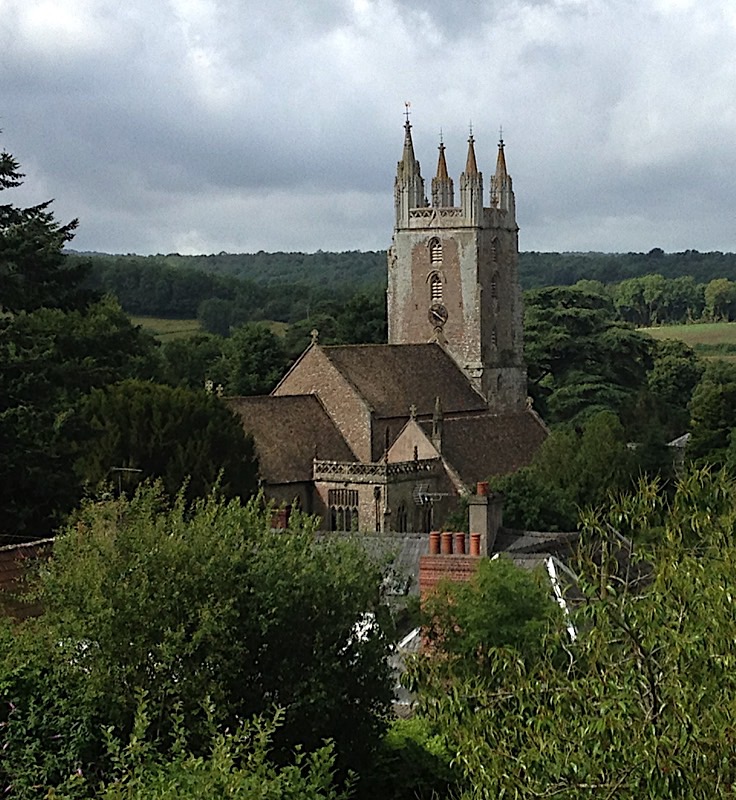
The area of the Forest of Dean has fluctuated historically, but its’ area can be considered to be an inverted triangle with a west boundary marked by the River Wye and the eastern boundary marked by the River Severn; to the north the invisible boundary it that between Gloucestershire and Herefordshire. The northern part of the district is largely farming country, while the central part remains a mix of ancient forest and commercial plantations, which were really only introduced during the 20th century. The woodland area covers over 43 square miles. The Romans were in the Forest of Dean by about 50AD governing the area from Ariconium. The late Anglo-Saxon kings used the Forest for hunting, but it was the Norman kings who invoked forest law to demand the exclusive use of the ‘vert’ for the use of the king and his invited guests. The Hundred of St Briavels was created and a castle built there in 1130 to protect and enforce the king’s rights. Milo Fitz Walter, Earl of Gloucester, was made the first Constable and Warden of the Forest. Verderers continued to protect the kings’ rights through Tudor times and, indeed, to the present day. Early charcoal blast furnaces, powered by water, were built at Lydbrook, Lydney, Redbrook and Westbury. There was also copper smelting at Redbrook, tinplate works at Lydbrook, Lydney and Redbrook, and a glassworks at Newnham in the 17th century. However, it was the mining of iron and coal in the Forest of Dean that made the area so important, growing during the 17th century, together with the associated industries that grew with them. These peaked in the 1700’s and 1800’s, before finally declining during the 20th century. By 1938 the Forest of Dean was producing 1.35 millions tons of coal in a single year! About half of all the men working in the Forest of Dean were still working in the coal industry in 1945. This list of places and people perhaps give a flavour to the long, complex but fascinating history that is the Forest of Dean. Pictures - Newland Church (above). |
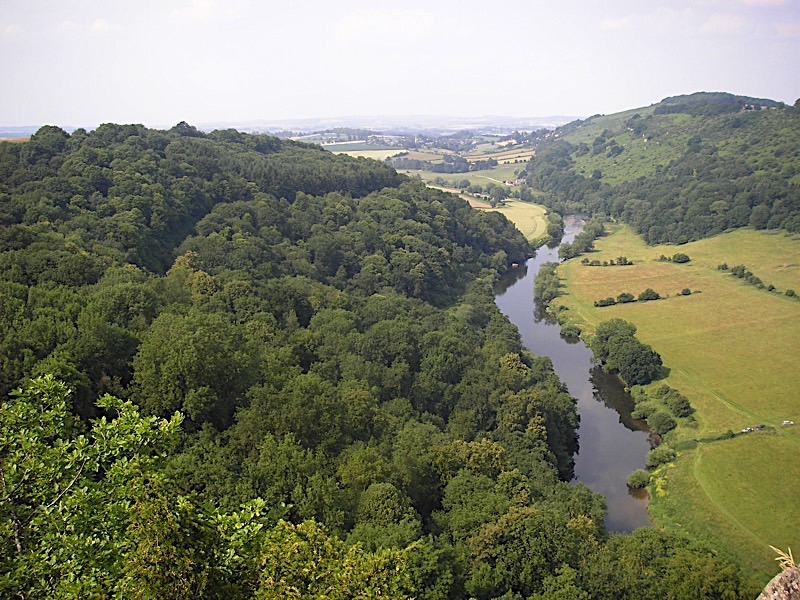 Now the mines have disappeared, save for a small group of Freeminers who continue the traditions. Some of the workers’ old terraced houses in the towns and the hamlet cottages spread around the area remind us of the industrial past, but the smoke and the noise is gone. Woodland country lanes and scenic panoramas now prevail but, every now and then, one can find an old tramroad or a cycleway where once there was a railway. One might see an industrial chimney towering between the trees, perhaps a silent quarry or huge old stones where buildings once stood.