Places and People Forest of Dean
- About the Forest of Dean
- Abenhall, Gloucestershire
- Anchor Inn, Lydbrook
- Ariconium, Herefordshire
- Arthur and Edward Colliery
- Bigsweir, Gloucestershire
- Bishopswood, Herefordshireshire
- Bixslade (Bicslade)
- Blakeney, Gloucestershire
- Bloomery (definition)
- Bradley House
- Bream, Gloucestershire
- Bullo Pill, Gloucestershire
- Cannop Colliery
- Cinderford, Gloucestershire
- Clearwell, Gloucestershire
- Coleford, Gloucestershire
- Collieries
- Crawshay, Henry
- Danby Lodge
- Darkhill Brick, Colliery + Ironworks
- Dates in the Forest of Dean
- Dean Forest (Mines) Act 1838
- Dean Forest Railway
- Dean Forest (Reafforestation)
Act 1668 - The Dean Forest Riots
- Dean Hall, Littledean
- Dean Heritage Centre
- Dean Road
- Drybrook, Gloucestershire
- Eastern United Colliery
- Fairplay Iron Mine
- Findall Iron Mine
- Flaxley, Gloucestershire
- Forest of Dean Central Railway
- Free Miners
- Green Bottom
- Gunns Mill
- The Haie (house + tunnel)
- Harvey, F. W.
- Hopewell Engine Colliery
- Horlick, James and William
- Kings Lodge
- Lightmoor Colliery
- Littledean, Gloucestershire
- Lower Redbrook, Gloucestershire
- Lydbrook, Gloucestershire
- Lydney, Gloucestershire
- Mining and Forest Terms
- Mitcheldean, Gloucestershire
- Mushet, David and Robert
- Nelson Colliery
- Newland, Gloucestershire
- Newnham, Gloucestershire
- Northern United Colliery
- Offas Dyke
- Parkend, Gloucestershire
- Pillowell, Gloucestershire
- Protheroe, Edward
- Pubs of the Forest of Dean
- Purton, Gloucestershire
- Redbrook, Gloucestershire
- Ruardean, Gloucestershire
- Severn and Wye Railway Co.
- Severn Bridge Railway
- Shakemantle Iron Mine
- Speech House
- Speech House Hill Colliery
- St Briavels Castle
- St Briavels, May-pole
- Strip-and at-it Colliery
- Symonds Yat
- Teague, James
- Teague, Moses
- Trafalgar Colliery
- Tramroad
- True Blue Colliery
- Union Colliery
- Upper and Middle Forge
- Upper Lydbrook Station
- Upper Mill, Edge Hills
- Upper Redbrook
- Verderer (definition)
- Verderers' Court
- Welshbury Hill Fort
- Westbury Brook Iron Mine
- Whitecliff Furnace
- Whitecliff House
- Whitecliff Quarry
- Whitecroft
- Whitecross Manor
- Wigpool, Gloucestershire
- Wintour, Sir John
The Mushets
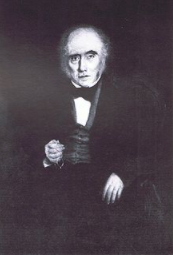
David Mushet was born at Dalkeith, near Edinburgh in 1772. His father, although a weaver, established a foundry in Dalkeith and David occasionally went with his to the ironworks. Age 19 he left school and took a job as an accountant at the Clyde iron Works. While there he began experimenting with the iron processes, but later was prevented to do so. He continued he research at various locations in Scotland and eventually was recognised as an expert in the field of iron and steel making. David Mushet moved to Derbyshire in 1805 and continued to research and published articles on his thoughts and finds. In 1808 he was appoached by Thomas Halford, a wealthy investor fom London, and owner of two furnaces at Whitecliff, just west of Coleford, in the Forest of Dean. Halford asked Mushet for help and offered to pay for his services to improve the quality and quanity of the iron produced. Mushet recommended a major rebuild of Whitecliff and remained to supervise the work In February 1810 he moved to Coleford and was later joined by his wife and family. He became full-time manager at Whitecliff and invested a quarter share in the business. It seems the major invester, Thomas Halford, began to lose money in other businesses and was bankrupt by 1816. |
 |
|
Mushet had continued to invest in other Forest ventures such as coal mines and was able to live from the profits. He continued to experiment with iron and, in 1815 me found a way of producing refined iron from the blast furnace without have to then refine it. He patented the process and was, in some cases, producing a form of steel. In 1818 over a period of two years he built a foundry at Darkhill, just south of Milkwall. He continued to produce iron there, but his main interest was in experiementation and research. He became a director of the British Iron Company and, over the next ten years, built a significant empire in iron mines, coal mines, tramways and joined the board of the Severn and Wye Railway and Canal Company. In 1845, at the age of 73, David Mushet retired to Monmouth, leaving Darkhill to his three sons. Robert Mushet, his youngest son, became manager of Darkhill. David Mushet died at Monmouth in 1847 and was buried in Staunton churchyard, in the Forest. |
|
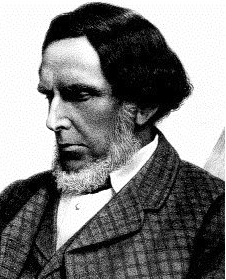
Robert Forester Mushet was born at Coleford in 1811, son of David Mushet, was the youngest of six children. He studied metallurgy under his father's supervision and took over management of Darkhill in 1845. Three years later he moved to the newly built Forest Steel Works alongside Darkhill, where he continued in his father footsteps, where it was claimed he did 10,000 experiements in ten years. In 1862 he moved to the nearby Titanic Steelworks. One of Robert's greatest achievements was perfecting the Bessemer process, but his patent expired. Henry Bessemer then claimed to have discovered the same thing independently! In 1857 he produced steel at Darkhill, which was used to produce steel railway lines. They were purchased by the Midland Railway, who were replacing iron rails every 3-5 months. Some of Robert Mushet's steel rails lasted more than 16 years! His second great invention was Mushet's Special Steel. This was tool steel and air-hardening steel and transformed industrial metalworking. The sad part of the story is that Mushet never really capitalised on his success. While others prospered and made fortunes using Mushet's discoveries he did not. By 1866 he was in ill-health and destitute! |
 |
|
The remarkable, but true part of the story is that Robert's 16 year old daughter travelled to London alone to confront Bessemer. Mary Mushet pointed out that it was her father who had perfected the Bessemer process. Whether through charity, guilt or fear of litigation, Bessemer decided he would pay Mushet a pension each year of £300. He paid that for 20 years!
Robert Mushet died at Cheltenham in 1891. Even though Dark Hill has been partially excavated, the iron works, brick works and partial tramway have survived extremely well! The complex stands on a series of terraces down the hillside. It remains an industrial archaeoloical site of great international importance and is open to the public.
|
