All Places
- Abenhall, Gloucestershire
- Abson, Gloucestershire
- Aston Ingham, Herefordshire
- Bedwellty, Monmouthshire
- Bilston, Stafffordshire
- Bishopswood, Herefordshire
- Bodfari, Flintshire
- Bolton, Lancashire
- Bristol, city of
- BURGHAM, the places
- BURGUM, the place
- Cefn Mawr, Denbighshire
- Cinderford, Gloucestershire
- Derby St Werburgh, Derbyshire
- Dixon, Monmouthshire
- Drybrook, Gloucestershire
- Eardington, Shropshire
- English Bicknor, Gloucestershire
- Fetter Hill, Gloucestershire
- Flaxley, Gloucestershire
- FOREST OF DEAN
- Foy, Herefordshire
- Hope Mansell, Herefordshire
- Kings Norton, Birmingham
- Kempley, Herefordshire
- Kilcot, Gloucestershire
- Linton, Herefordshire
- Littledean, Gloucestershire
- Llanfiangel Llantarnam, Monmouthshire
- Lydbrook, Gloucestershire
- Lydney, Gloucestershire
- Mitcheldean, Gloucestershire
- Monks Coppenhall, Cheshire
- Much Marcle, Herefordshire
- Newland, Gloucestershire
- Palmer Flats, Gloucestershire
- Redbrook, Gloucestershire
- Rotherham, Yorkshire
- Ruabon, Denbighshire
- Ruardean, Gloucestershire
- Sheffield, Yorkshire
- Shelsley Beauchamp, WOR
- Smethwick, Staffordshire
- Taynton, Gloucestershire
- Upton, Worcestershire
- Upton Bishop, Herefordshire
- Walford, Herefordshire
- Walton on the Hill, Liverpool
- Weston under Penyard, Herefordshire
- Wick, Gloucestershire
- Woolaston, Herefordshire
- Woolhope, Herefordshire
- Workhouses
- Pubs of the Forest of Dean
Wick, Gloucestershire
Burgums and Burghams of the "AA" family tree lived here, or nearby.
WICK, is a village in South Gloucestershire and is the main settlement in the civil parish of Wick and Abson. It is nestled in the valley between the Cotswold and Mendip hills. In 1887 the population was 648. Nowadays about 2000 people in the civil parish. The River Boyd flows through the village providing beautiful watermeadows. The church is dedicated to St Martholomew and dates from 1850.
 Of interest is nearby Blue Lodge, which was once the home of Anna Sewell, the author of the famous children's book Black Beauty. The book featured a location called Britwick Park, which is believed to have been based on nearby Tracy Park on the Bath Road, which is now the Tracy Park Hotel & County Club, including a Crown Gold Course.
It has several shops and two public houses, the Carpenters Arms (formerly the Bridge Inn) and the Rose and Crown. (See picture below)
It also has a primary school and a village hall.
| There was iron-founding at Wick from the mid-1700's where the Burgums worked. We know that John Burgum, born in 1757, started life at Flaxley, in the Forest of Dean, but married Sarah Summerville at Mangotsfield, near Bristol, in 1782. That is only six miles from Wick and that is where he died in 1831. The family were iron workers. Was that why he was drawn to Wick? John and Sarah had six children at Wick. These are my direct ancetors. The industry used water power from the River Boyd. The iron foundary had rolling mills for rolling lengths of bar and bolt iron. Records show a fuctioning water mill and the iron works in the valley. | 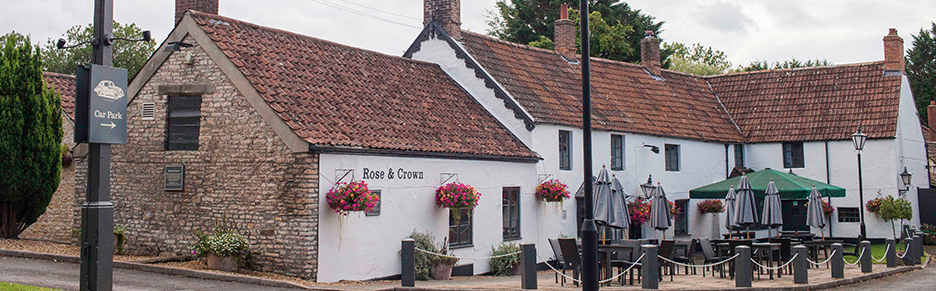 |
 |
Other industries recorded were a rolling mill (1882), red ocre was mined in the area and a world-renowned ocre processing works (1895), which continued operations until 1968. The building were demolished in 1970 and the site was cleared. This was located towards the bottom of the Wick Golden Valley nature reserve. Wick Quarry was still in use extracting limestone. It is owned by CEMEX. |  |
The main entrance to the reserve is about 250 metres from the Carpenters Arms. Just north of the village is Wick Gorge, which was a well-known beauty spot 200 years ago.
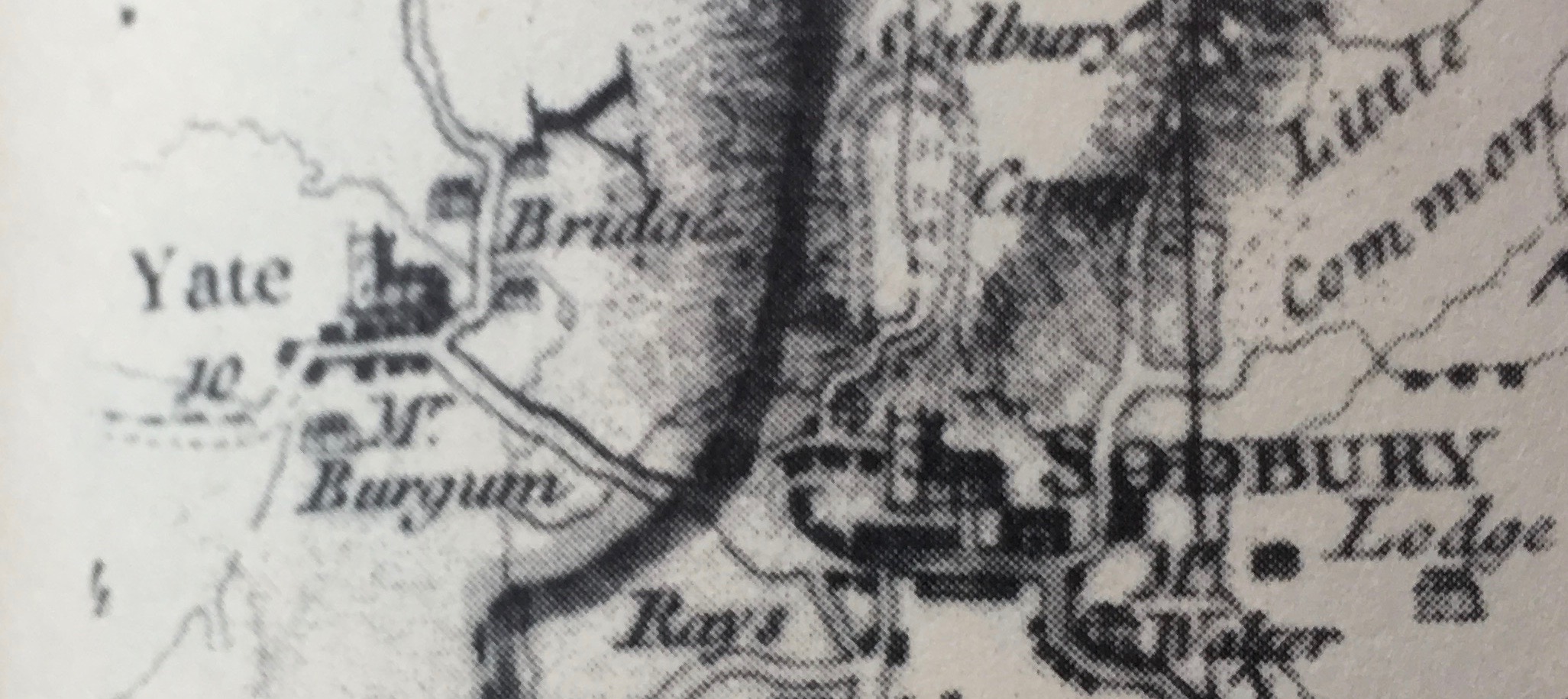 |
Another curiosity is that just eight miles north of Wick is Yate, just outside Sodbury. Isaac Taylor's 1777 map of Gloucestershire shows a house annotated Mr Burgum. This, I believe, is Henry Burgum, the Bristol pewterer, who had interests elsewhere to do with iron making. Did he have anything to do the iron foundary at Wick? Click here for the AA family tree Click here for more about the church at Wick and the parish registers of the Burgums who lived there. |