All Places
- Abenhall, Gloucestershire
- Abson, Gloucestershire
- Aston Ingham, Herefordshire
- Bedwellty, Monmouthshire
- Bilston, Stafffordshire
- Bishopswood, Herefordshire
- Bodfari, Flintshire
- Bolton, Lancashire
- Bristol, city of
- BURGHAM, the places
- BURGUM, the place
- Cefn Mawr, Denbighshire
- Cinderford, Gloucestershire
- Derby St Werburgh, Derbyshire
- Dixon, Monmouthshire
- Drybrook, Gloucestershire
- Eardington, Shropshire
- English Bicknor, Gloucestershire
- Fetter Hill, Gloucestershire
- Flaxley, Gloucestershire
- FOREST OF DEAN
- Foy, Herefordshire
- Hope Mansell, Herefordshire
- Kings Norton, Birmingham
- Kempley, Herefordshire
- Kilcot, Gloucestershire
- Linton, Herefordshire
- Littledean, Gloucestershire
- Llanfiangel Llantarnam, Monmouthshire
- Lydbrook, Gloucestershire
- Lydney, Gloucestershire
- Mitcheldean, Gloucestershire
- Monks Coppenhall, Cheshire
- Much Marcle, Herefordshire
- Newland, Gloucestershire
- Palmer Flats, Gloucestershire
- Redbrook, Gloucestershire
- Rotherham, Yorkshire
- Ruabon, Denbighshire
- Ruardean, Gloucestershire
- Sheffield, Yorkshire
- Shelsley Beauchamp, WOR
- Smethwick, Staffordshire
- Taynton, Gloucestershire
- Upton, Worcestershire
- Upton Bishop, Herefordshire
- Walford, Herefordshire
- Walton on the Hill, Liverpool
- Weston under Penyard, Herefordshire
- Wick, Gloucestershire
- Woolaston, Herefordshire
- Woolhope, Herefordshire
- Workhouses
- Pubs of the Forest of Dean
Workhouses
 (Picture above) - Watling Street Road Workhouse, Preston, Lancashire, U.K. |
|
Workhouses really came about in 1601 following the "Act for the Relief of the Poor". This made parishes legally responsible for the care of those living within that parish who were unable to work. It might be they were too old age or infirm to work. The Act classed the poor into one of three groups. Able-bodied poor people would be offered work in a house of correction, later to become workhouses. It also made the parish responsible for the poor by either providing housing or giving poor relief in the form of money, food, or other necessities to those living in their own homes. This was funded through a local property tax on the more wealthy in that parish. The number of parish workhouses in 1776 numbered about 1,800, about one in seven of the total number of parishes. Those seeking poor relief were expected to go to the workhouse and work there in exchange for food and accommodation without any actual payment. Over time some parishes combined their resources with others creating Union Workhouses. The system was inevitably open to abuse by those running them and the condtions inside were far from satisfactory. It is thought about 6% of the population were living in workhouses at any given time. The system of workhouses had been to help the poor, by giving them somewhere to live, to work and receive basic healthcare. It was also an attempt to reduce costs, but the system was far from perfect and was open to corruption. Instead of helping the poor, the system led to the breakup of families, sometimes exposure to violence and simple neglect. Estimatse suggest perhaps up to 80% of the population in England and Wales were affected by the Poor Law Unions. Many workhouses were more like prisons using enforced labour. The hardships were great, death rates were high and thet could be bleak and cruel places. Charles Dickens high-lighted to issue in his novel Oliver Twist. |
 |
The picture on the left is called Eventide: A Scene in the Westminster Union. It was painted by Hubert von Herkomer (1849-1914).
It depicts women in the St James Workhouse, in Soho, London. It was paintered in 1878 and hangs in the Warker Art Gallery, in Liverpool. Von Herkomer came to England from Bavaria, having experienced and witnessed the hardships of the poor. |
| The Union Workhouse, Kidderminster Foreign, Worcestershire Construction of the building was begun in 1836 and took two years to building. It was built on the east side of Sutton Road. The project cost £5,650 and had a capacity for 400 inmates (see map below) . Only one section of the building still exists today and is pictured below (below right). The workhouse site later became Kidderminster General Hospital. |
 | 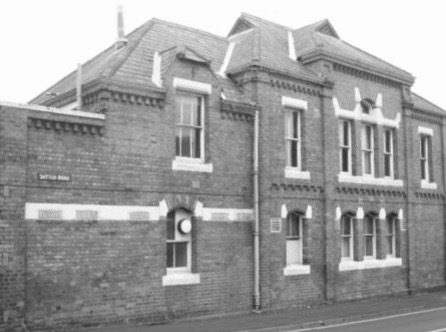 |
An entry in the 1861 census (see CS1861-75 below) shows five young girls listed as pauper inmates in the Union Workhouse, in Kidderminster, serving the counties of Worcestershire, Shropshire and Staffordshire.
The girls were Sarah Ann Burgam aged 14, Elizabeth Burgam aged 11, Charlotte Burgam aged 9, Alice Burgam aged 7 and Martha Burgam aged 5. All were said to be scholars and all the girls were born at nearby Cookley, a lovely village just 3 miles to the north of Kidderminster.
REF No |
YEAR |
ADDRESS |
NANE |
RELATION |
AGE |
PROFESSION |
WHERE BORN |
BORN |
| CS1861-75 | 1861 | Union | Sarah A. Burgam | Pauper Inmate | 14 | Scholar | Worcestershire | 1847 |
| Workhouse | Elizabeth Burgam | Pauper Inmate | 11 | Scholar | Worcestershire | 1850 | ||
| Kidderminster | Charlotte Burgam | Pauper Inmate | 9 | Scholar | Worcestershire | 1852 | ||
| Foreign | Alice Burgam | Pauper Inmate | 7 | Scholar | Worcestershire | 1854 | ||
| Worcestershire | Martha Burgam | Pauper Inmate | 5 | Scholar | Worcestershire | 1856 |
Numerous questions obviously came to mind. Who were these girls? Where were their parents? What eventually came of them? I first searched the Cookley area in the 1851 census to see whether that held any clues. I soon found what I was looking for (see CS1851-48 below). The address was Rock Hill, Shrubbery (or Shrubsey) Row, Wolverley, the next village from Cookley. Living there was Moses Burgam, aged 27, a pudler. This made sense as there was an ironworks in the area. (A pudler stirs the molten iron as it melts in the blast furnace, controlling the process). Living with him was his wife Jane, aged 25, who had been born in Cookley. The first two daughters Sarah Ann (aged 4) and Elizabeth (aged 4 months) were also present. Sarah was listed as born in Staffordshire, while Elizabeth was born in Cookley, Worcestershire.
REF No |
YEAR |
ADDRESS |
NANE |
AGE |
PROFESSION |
WHERE BORN |
BORN |
| CS1851-48 | 1851 | Shrubbery Row | Moses Burgam | 27 | Pudler | Liverpool, Lancs | 1847 |
| Wolverley | Jane Burgam | 25 | Wife | Cookley, Worcs | 1850 | ||
| Kidderminster | Sarah Ann Burgam | 4 | Daughter | Staffordshire | 1852 | ||
| Worcestershire | Elizabeth Burgam | 4 m | Daughter | Cookley, Worcs | 1854 |
Moses, I learned, had married Jane Davis in the registration district of Kidderminster, which would include the Wolverley, and Cookley area. I also found parish records online to indicate that Alice Burgum and a Sarah Taylor Burgum were both christened at Cookley on 24th November 1854, with Moses and Jane Burgum recorded as the parents. Alice's birth was registered in the first quarter of 1854, so presumably Moses had been around at least until 1853. So what happened during the next eight years ans where were the girls parents in 1861? Well finally I found Jane Brogam (sigh) in the 1861 census (see CS1861-76 below). She was now 35 years old, and her birth place was listed as Wolverley. She was living at Court 4, Mill Street, Kidderminster and working as a general servant. She was in the house of John Swain, a 35 year old worsted weaver from Kidderminster. No wife is listed, but he did have two sons John Swain aged 12, also working as a worsted weaver and George Henry Swain, aged 10, who was a scholar. So Jane is working, but unable to look after her children.
REF No |
YEAR |
ADDRESS |
NANE |
RELATION |
AGE |
PROFESSION |
WHERE BORN |
BORN |
| CS1861-76 | 1861 | Court 4 | John Swain | Head | 35 | Worsted Weaver | Worcestershire | 1826? |
| Mill Street | John Swain | Son | 12 | Worsted Weaver | Worcestershire | 1849? | ||
| Kidderminster | George Hy Swain | Son | 10 | Scholar | Worcestershire | 1851 | ||
| Worcestershire | Jane Burgam | servant | 35 | General Servant | Worcestershire | 1826 |
I have been unable find Moses (so far) in any census after 1851 and no death record. Perhaps I have missed it or the spelling is even more obscure! According to the 1851 census, Moses had been born in about 1824. On 11th April 1824 a Moses Burgum was baptised at Bodfari, Flintshire, where a number of Burgums lived again working with iron. The father and mother were listed as William Leonard and Ann Burgum. I can find no record of them getting married. However I do have an Ann Burgum being baptised 1st March 1807, at Weaverham, not far from Liverpool. If this is her, she would have had Moses when she was 17 years old. Her parents were Henry and Mary Burgum, who later lived at Bodfari. In another twist, the 1871 census (see CS1871-27 below) indicates that John Swain was still living at Mill Street, Kidderminster. His wife is Jane Swain. Also living there are their daughters Elizabeth (20), Charlotte (18), Alice (17), Martha (15) and Jain (4). The older children are working as worsted spinners and Winters, while Martha is working as a doffer (replenishing the empty Robbins on the looms). The first four girls were born at Cookley while Jain, the youngest, was born at Kidderminster and presumably belongs to John Swain. John has taken in her daughters, rescuing them from the workhouse, and married Jane. Or has he?
REF No |
YEAR |
ADDRESS |
NANE |
RELATION |
AGE |
PROFESSION |
WHERE BORN |
BORN |
| CS1871-27 | 1871 | 52 Mill Street | John Swain | Head | 46 | Carpet Weaver | Kidderminster | 1825 |
| Kidderminster | Jane Swain | Wife | 45 | Wolvesley, WOR | 1826 | |||
| Worcestershire | Elizabeth Burgam | Daughter | 20 | Worsted Winder | Cookley, Worcs.. | 1851 | ||
| Charlotte Burgam | Daughter | 18 | Worsted Spinner | Cookley, Worcs. | 1853 | |||
| Alice Burgam | Daughter | 17 | Worsted Spinner | Cookley, Worcs. | 1855 | |||
| Martha Burgam | Daughter | 15 | Doffer | Cookley, Worcs. | 1856 | |||
| Jain Swain | Daughter | 4 | Kidderminster | 1867 |
I can find no record of their marriage and when Jane dies at Kidderminster in 1897, she is registered as Jane Burgham. The age also fits exactly. I continue to search for Moses, but have yet to find him in another census. Did he die? Did he walk away, live rough or change his name? Or is there one final possibility. A Moses Burgum died in Pontefract, Yorkshire, in 1886. He was aged 64. Plus or minus a year this fits with the Bodfari baptism date and I have no other record of a Burgum (or Burgham) being christened or registered with the name Moses. This is, of course, an educated guess. I might just be "forcing the jigsaw". There might well be other information out there, which can substantiate my story or prove me wrong. Can you help?