The Berengaria Passenger Ship
The Berengaria
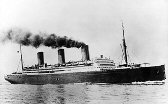 The Berengaria was originally called the Imperator and was launched on 23rd May 1912 at the Vulcan Shipyards, in Hamburg, Germany. She was built for the Hamburg-Amerika Line in direct competition to the White Star liner Olympic (sister ship to the Titanic). Late changes were made in both hull design and equipment, being launched only 5 weeks after the Titanic disaster. She had a displacement of 52,117 tons and was 909 feet long. She had 3 funnels and 2 masts, four turbines, and a maximum speed of 24 knots. At the time the Imperator was the world's largest ship.
During World War One the Imperator lay protected on the river Elbe. At the end of the war the Allied forces of occupation found the ship rusted, decayed in the mud. It served as a US Army troop transport until August 1919, when it was transferred to Britain and sold to the Cunard Line. Retaining the name Imperator, it made its first voyage for Cunard on 11 December 1919 from New York to Southampton. On 21 February 1920 it made its first voyage from Liverpool to New York. The ship continued to serve this route but it was decided to change the name to the Berengaria and converted from coal burning to oil burning engines.
George Edwin Burgham, of Yorkley in the Forest of Dean (England), travelled on the Berengaria, leaving from Southampton (England), arriving in New York on December 31st 1922, clearing immigration at Ellis Island. George was married and aged 30.
The ship operated successfully on Cunard's express service in conjunction with the Mauretania and Aquitania. 1933 saw another major overhaul for the ship at Southampton, during which the interior was upgraded. The withdrawal of the Mauretania in 1934 placed further pressure on the ship to operate more efficiently and in 1935 she set a record passage on the New York to Southampton route. She was damaged by fire at New York in 1938 and finally scrapped in 1946.
Back to Ellis Island Records
The Berengaria was originally called the Imperator and was launched on 23rd May 1912 at the Vulcan Shipyards, in Hamburg, Germany. She was built for the Hamburg-Amerika Line in direct competition to the White Star liner Olympic (sister ship to the Titanic). Late changes were made in both hull design and equipment, being launched only 5 weeks after the Titanic disaster. She had a displacement of 52,117 tons and was 909 feet long. She had 3 funnels and 2 masts, four turbines, and a maximum speed of 24 knots. At the time the Imperator was the world's largest ship.
During World War One the Imperator lay protected on the river Elbe. At the end of the war the Allied forces of occupation found the ship rusted, decayed in the mud. It served as a US Army troop transport until August 1919, when it was transferred to Britain and sold to the Cunard Line. Retaining the name Imperator, it made its first voyage for Cunard on 11 December 1919 from New York to Southampton. On 21 February 1920 it made its first voyage from Liverpool to New York. The ship continued to serve this route but it was decided to change the name to the Berengaria and converted from coal burning to oil burning engines.
George Edwin Burgham, of Yorkley in the Forest of Dean (England), travelled on the Berengaria, leaving from Southampton (England), arriving in New York on December 31st 1922, clearing immigration at Ellis Island. George was married and aged 30.
The ship operated successfully on Cunard's express service in conjunction with the Mauretania and Aquitania. 1933 saw another major overhaul for the ship at Southampton, during which the interior was upgraded. The withdrawal of the Mauretania in 1934 placed further pressure on the ship to operate more efficiently and in 1935 she set a record passage on the New York to Southampton route. She was damaged by fire at New York in 1938 and finally scrapped in 1946.
Back to Ellis Island Records